Table of Contents
ToggleRegenerative medicine (Endometrium & Ovarian)
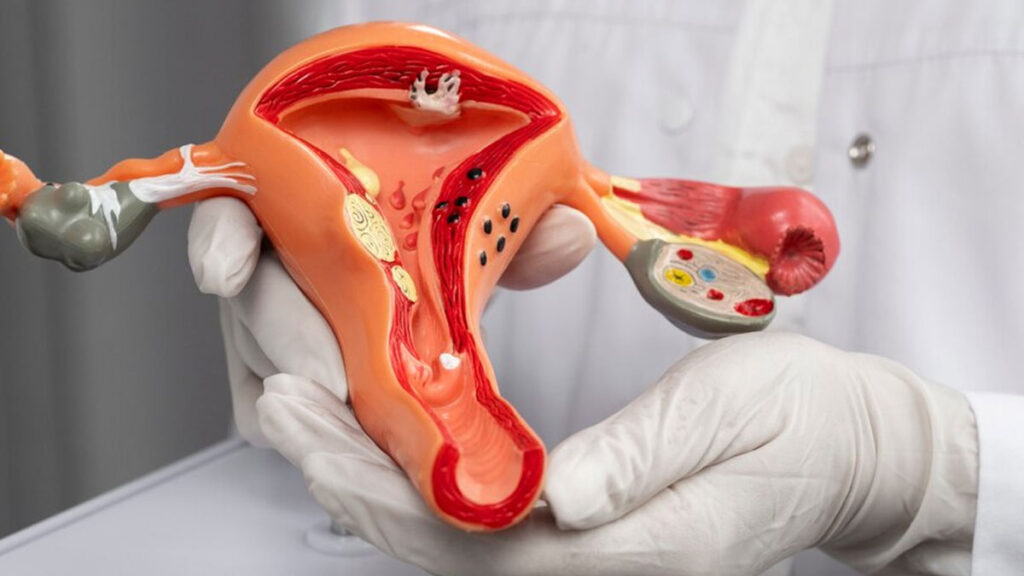
Regenerative medicine focuses on repairing, replacing, or regenerating damaged
tissues and organs to restore normal function. In the context of fertility,
regenerative medicine aims to improve endometrial and ovarian health to enhance
reproductive outcomes.
Techniques include stem cell therapy, platelet-rich plasma (PRP) therapy, and
growth factors to address issues such as thin endometrium, poor ovarian reserve,
and ovarian dysfunction.
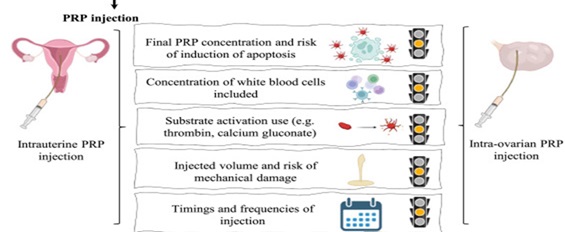
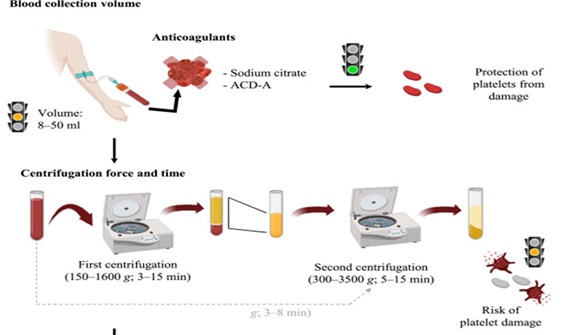
PRP is a portion of plasma fraction of autologous blood derived from an individual, having
platelet concentration above baseline.
Stem cell therapy is a treatment that uses stem cells, which have the ability to turn into
other cell types in the body, to repair damaged or diseased tissues. It’s a type of
regenerative medicine, aiming to restore function in damaged organs or tissues by using
stem cells to replace lost cells or tissues.
INDICATIONS
- Poor ovarian reserve
- Thin endometrium
- To improve endometrial receptivity
Key Features of Regenerative Medicine for Reproductive Health
- Personalized Treatment: Therapies are tailored to the individual’s specific reproductive health issues.
- Minimally Invasive: Many regenerative procedures are less invasive compared to traditional surgical methods.
- Autologous Therapies: Use of the patient’s own cells and tissues minimizes the risk of immune rejection and complications.
- Enhanced Healing and Regeneration: Techniques promote natural healing processes and tissue regeneration.
- Potential for Improved Fertility: Regenerative therapies can enhance endometrial receptivity and ovarian function, increasing the chances of successful conception and pregnancy.
- Innovation and Research: Ongoing research and clinical trials continue to advance the field, providing new hope for patients with challenging reproductive issues.
Overview:
- Definition: Regenerative medicine focuses on repairing, replacing, or regenerating damaged tissues and organs to restore normal function. In the context of fertility, regenerative medicine aims to improve endometrial and ovarian health to enhance reproductive outcomes.
- Applications: Techniques include stem cell therapy, platelet-rich plasma (PRP) therapy, and growth factors to address issues such as thin endometrium, poor ovarian reserve, and ovarian dysfunction.
Regenerative Medicine for the Endometrium
1. Endometrial Health Issues:
- Thin Endometrium: An endometrium that is too thin can impair embryo implantation and result in infertility.
- Asherman’s Syndrome: Scar tissue within the uterine cavity, leading to menstrual abnormalities and infertility.
- Chronic Endometritis: Persistent inflammation of the endometrium, which can affect implantation and pregnancy maintenance.
2. Treatment Approaches:
Stem Cell Therapy:
- Mesenchymal Stem Cells (MSCs): Derived from bone marrow, adipose tissue, or the umbilical cord, MSCs can differentiate into endometrial cells and promote tissue repair.
- Procedure: MSCs are isolated, cultured, and then injected into the uterine cavity to promote regeneration of the endometrial lining.
- Benefits: Improved endometrial thickness, enhanced vascularization, and better implantation rates.
Platelet-Rich Plasma (PRP) Therapy:
- Definition: PRP is a concentration of platelets and growth factors derived from the patient’s own blood.
- Procedure: Blood is drawn from the patient, processed to concentrate the platelets, and then injected into the uterine cavity.
- Benefits: Promotes healing, tissue regeneration, and angiogenesis, improving endometrial receptivity.
Growth Factors:
- Definition: Proteins that stimulate cell proliferation and differentiation.
- Application: Growth factors like granulocyte-colony stimulating factor (G-CSF) can be administered to enhance endometrial growth.
- Benefits: Improved endometrial thickness and receptivity.
Regenerative Medicine for the Ovaries
1. Ovarian Health Issues:
- Poor Ovarian Reserve: A low number of viable eggs, often due to aging, premature ovarian insufficiency, or medical treatments.
- Ovarian Dysfunction: Conditions such as polycystic ovary syndrome (PCOS) or ovarian failure that impact ovulation and fertility.
2. Treatment Approaches:
Stem Cell Therapy:
- Bone Marrow-Derived Stem Cells (BMDSCs): Stem cells from the bone marrow that can potentially differentiate into ovarian cells.
- Procedure: BMDSCs are harvested, processed, and injected into the ovaries.
- Benefits: Potential regeneration of ovarian tissue, improvement in ovarian function, and enhancement of fertility.
Platelet-Rich Plasma (PRP) Therapy:
- Definition: PRP contains growth factors that can rejuvenate ovarian tissue.
- Procedure: PRP is injected into the ovarian tissue.
- Benefits: Improvement in ovarian function, increase in follicle count, and better response to ovarian stimulation.
Ovarian Tissue Transplantation:
- Definition: Transplantation of healthy ovarian tissue to restore ovarian function.
- Procedure: Ovarian tissue is harvested, preserved, and later transplanted back into the patient.
- Benefits: Restoration of hormonal function and fertility potential.
Key Features of Regenerative Medicine for Reproductive Health
- Personalized Treatment: Therapies are tailored to the individual’s specific reproductive health issues.
- Minimally Invasive: Many regenerative procedures are less invasive compared to traditional surgical methods.
- Autologous Therapies: Use of the patient’s own cells and tissues minimizes the risk of immune rejection and complications.
- Enhanced Healing and Regeneration: Techniques promote natural healing processes and tissue regeneration.
- Potential for Improved Fertility: Regenerative therapies can enhance endometrial receptivity and ovarian function, increasing the chances of successful conception and pregnancy.
- Innovation and Research: Ongoing research and clinical trials continue to advance the field, providing new hope for patients with challenging reproductive issues.